
UVB UVA Reptile Lighting
Features:
- Spectrum correct, the most close to solar spectrum in UVB 310 +UVA 365nm.
- Small fixture, universal plug of E27/E26
- LED light source, Zero mercury
- Strengths UVI 3.0-7.0

Application
Overview:
UVB lamp helps indoor kept reptile pets to enjoy sun-like basking, which regulates their own vitamin D3 levels and enhances the level of absorption calcium. Pet owners and zoo keepers will endeavor to replicate the habitats to wildlife where they came from. This is where the story begins.
Purpose: We aim to seek and offer a good solution for habitats pets based on our 12 years of lighting experience.
Situation Background:
- Why LED? Energy saving today in 2022 is already common sense while retail platforms are still full of mercury vapor lamps over 100 watts.
- LED enables a more accurate wavelength solution possible, 5-10nm is possible to be batched, of which we do not need can be deleted to maximize the healthy light and system efficiency.
- The market is full of no-good LED products which definitely hurt the end users’ expectations and trust in LED technology.
There are many studies and research showing the importance of UVB’s basking role in lives, even including human patients who are not convenient to get out of the house. We do not list the purpose of UVB here as it is a serious and long topic of biology.
We will mainly try to figure out how to get a “good” UVB lamp. for our reptile.
Key knowledge:
1.Which wavelength;
2.How strong,
3.What instrument/meter is feasible, and how affordable for three parties manufacturer, Retailer; End-users
Theory basis:
Knowledge/data/info we need:
*A spectrum that reptiles need;
*The strength that reptile needs.
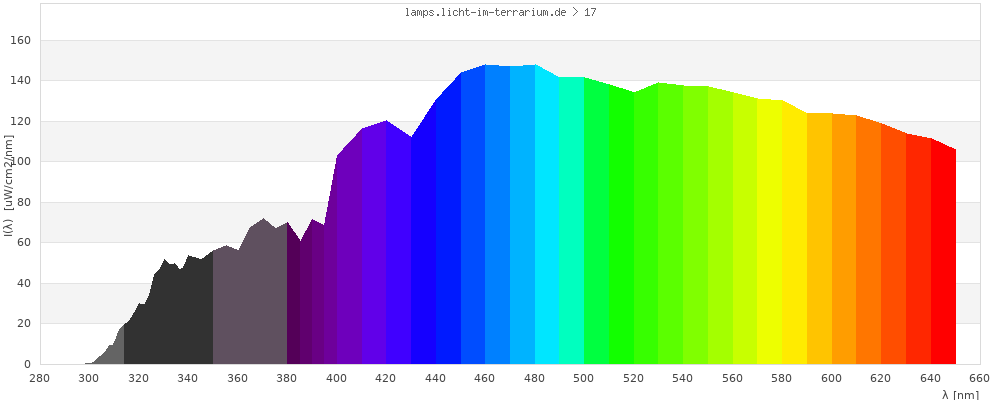
(fig 1)
Irradiance
11. January 1996, Australia
solar altitude 50°
from: Bernhard, G., B. Mayer, G. Seckmeyer, and A. Moise (1997), Measurements of spectral solar UV irradiance in tropical Australia, J. Geophys. Res., 102(D7), 8719–8730
Here great special thanks to Dr. Sarina Wunderlich, more details about the efforts she did will be stated later in other ways.In short, Sarina shows us how to define and work out the light to meet what it needs.
www.UVguide.co.uk is a very good place to pick up what strength each species needs, and of course lots of other info which is open source with these great people’s dedication for the community.
Method Outline:
- Wavelength source and selected.
- Power in calculation.
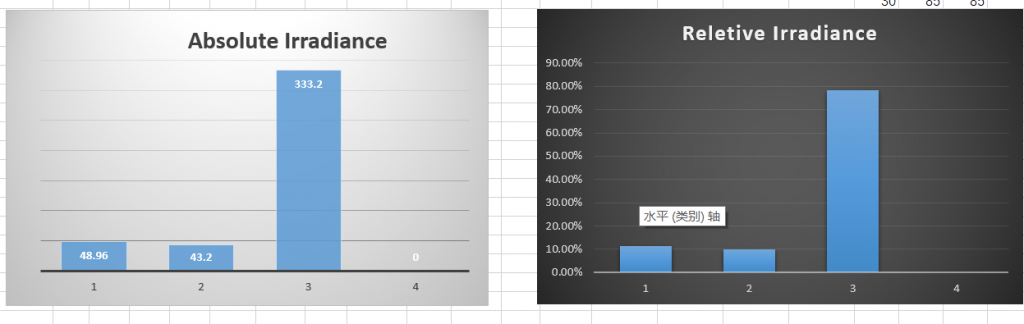
- Power source input and drive
4. Measure the strength with a RG meter and Tenmars,
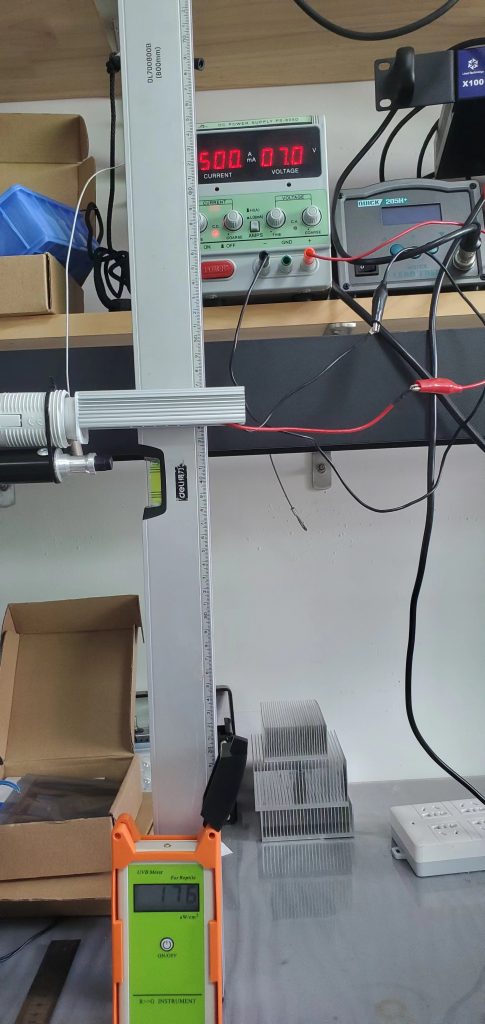
5. Measure the closest result from Step 4 in Integrating Sphere and test a real spectrum in the graph.
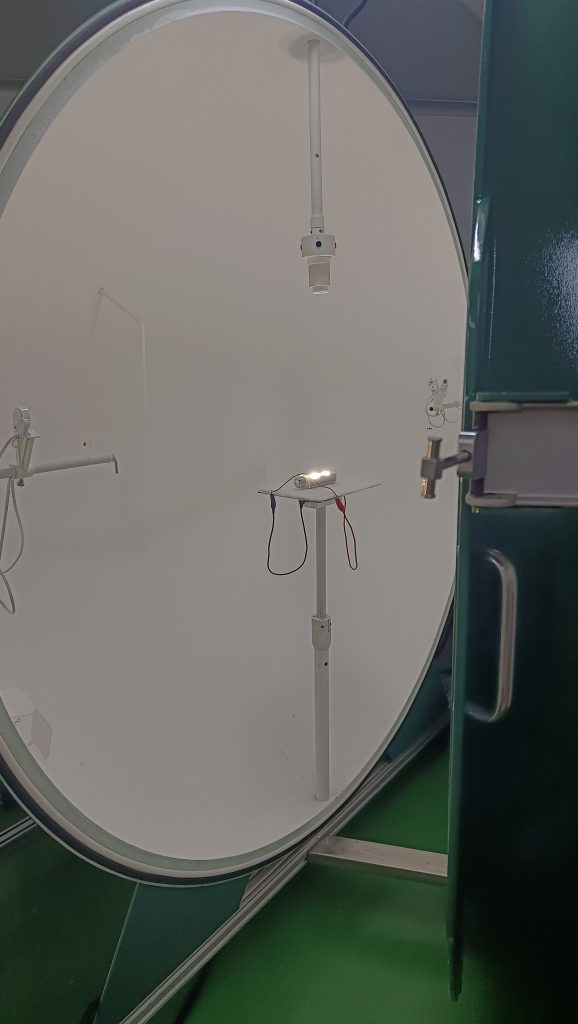
* Through the following, we are going to answer questions:
1.What is a UVB lamp?
2.What is a good UVB lamp(for reptiles)?
3.How to choose a good UVB lamp?
4.How to make a good UVB lamp?
We will extend the above topics in more detail for more sharing attitude for people who are interested and able to study and contribute for the community.
4 How to make a good UVB lamp?
4.1 Light quality
In artificial light, we use a factor of the light spectrum to describe, see, simulate, and replicate a direct index of solar effect where everything is evolved. So to understand the right solar spectrum is the first target.
Solar Spectrum (arrived at that ground) varies a bit based on different latitudes/locations, United Stage, United Kingdom, Singapore, Australia and others. Firstly we apply this ( Fig.2 ) for reference.
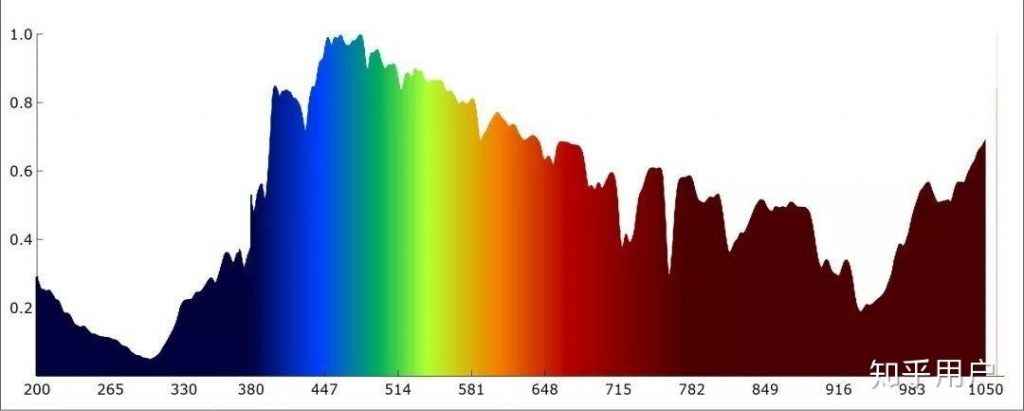
*The wave under 300nm can hardly get to the ground as the Ozone absorbs. This is also quite an important point that artificial light needs strictly and basically to obey and deliver. We will get back to this point later.
A lamp to fully cover the solar spectrum should start from 300nm-730nm. The lamp’s first role was to brighten the atmosphere for the human eye and we judge it as bright. Reptiles have four types of cone cells in the eye, in which the UVA is a “visible” factor. So UVA is also needed in a reptile lamp.
For components source availability and economic reason, there are only a few (peak) wavelengths that is optional, generally known as 310nm, 315nm, 320nm,345nm, 365nm, 380nm, 390nm,410nm, 450nm=visible blue, etc
Phase one, we make lamps to within the solar spectrum, to avoid wavelengths shorter than 300nm, which is proved harmful/hazardous to the reptile retina.
Phase two, to add up more wavelength, like 320nm, 345nm, or 365nm, 390nm.
4.2Light quantity
“Ferguson Zones” is a UV index used by many others in the reptile field. UVI 1.0-UVI 15.0
Technically data unit is w/m², while many meter use μw/CM², which can be converted easily.
4.3 How to make a good lamp (electronics part)?
LED is a trend and no way to avoid the word in lighting for its great advantage in many aspects. As a light man for 14 years, I would share some points that end users and include businessmen for your daily choosing reference.
- LED is better(than other light sources), correct?
This is not a rumor but not a full fact.
- LED is a cold light source.
This is partially and relative definition. It is compared to others (which last for many decades light source, HID, filament lamp).
LED is a diode, which turns electricity into light, during this procedure, there is an efficiency issue, at the same time, where is the rest part of the energy? Do we need to deal with it?
Photo-electronics issue, roughly existing OK good diode can get a 35-40%.
This leads to the next issue, 60-65% of power needs to be dealt with as heat and many of the factories never take it as an issue.
- The flickering issue refers to THD 10%,
This directly affects the comfort of human visuals.
- LED is much longer than other light sources.
Lumen maintenance,
Electronics of power supply.
The above commonly asked questions also are the key points that lamp makers need to focus on. Nowadays source chain, we can simply define and divided into three main physical parts,
House kit, diode board, power supply.
| Components | Technology applied. |
| Fixture selected | |
| Light source, diode boards, design, arrangement. | Light distribution. |
| Power supply. | Heat, thermal management, |
Conclusion for pro readers:
Wavelength correct,
Strength correct, which can be adjusted with the soft pipe.
Lamp supplier: Spectrum QC, evidence; strength tested, evidence;
Heat control: user informed us that ventilation around the lamp body is preferred,
Lighting source: exact wavelength, evidence
Questions opening:
For the community:
A proof or certification lab is needed to verify such specifications qualified for reptiles, which needs cooperation between animal experts and electronics experts.
Reptile lighting
- Light correct
- Light strength correct
- Easy installation
- Long last compared to its price
- Long last during it lifetime time=good performance.
*How much is a UVB lamp
How much is a LED UVB lamp
LED technology is a trend of lighting source in many fixture applications, which can be seen in our daily life since 2010. In many fixtures, it is already an only role/choice, light flood light, panel light, tube light for a normal house, office, commercial lighting, and stage lighting. Then why is it so slowly in replacing the UVB lighting it seems so many people are worried or unconfident with that.
*Question: Is LED UVB technology too new in the world?
No.
Same question as, is LED UVB diode too new to be stable?
The fact is, UVB or UVC in LED is largely applied in industry business, especially UV curing in printing, poster printing, phone cover printing and even nail curing on consumers’ end. The biggest difference from those with UVB reptile lighting is, those are part of the machine, which we should call “equipment” for more accuracy, which has a large space and power source to reach the target, normally over 100watt to 1000watt and cooling by the water pump.
These are machines that help production, which they will input effort=cost( time and money ) to develop a more efficient one. To put it in conclusion, business machines use a lot of LED UVB diodes in high cost, high power and enough cooling affiliated part.
While consumer lighting, like specific application reptile light, the product itself will need to balance cost and price affordable.
How long can a UVB reptile light last?
*Sub Topic 1, How long will a UVB light last?
There are many saying that LED can last for 100,000 hours, 50,000 hours, or at least 40,000 hours. These numbers are not wrong, but saying this is in a very inaccurate way.
LED diode lasts very long(than other light sources) is comparing to the existing light source, filament lamps, gas lamps known as HID, compact fluorescent lamps (CFLS), etc, with a specific situation and together with other components that form a lamp, power supply, cables, and production. That is:
1. LED diode does not mean a lamp.
-The diode is still on,but the total output lumens are far way off the original, technically dead lamp we call.
2. Lamp including fixture, light source, power supply, and housing.
3. Cool temperature benefits the longevity of the diode.
4.There is no direct tool in our eye to clearly judge that the lamp works while it actually dims already(off the limit).
How to tell that a LED lamp failed?
There are criteria for judging LED diode failure in the LED business,(part of the lighting association)
LM80, LM79,L70.
We will clarify the normal statement between seller and user, in general specifications in the daily promotion, while potential words are not clarified. This also helps LED importers and manufacturers.
Sellers said, LED is good, last very long.
| Consumers | Sellers | Manufacturers | ||
| It lasts very long | ||||
To be continued.
 English